Wednesday, November 12, 2014

My precious moment


In that moment
that fleeting moment

In that fluid space
between night and dawn

The sky and the earth

my precious moment
and yours


--------------------------------

Tuesday, November 4, 2014

Purple Sunbird in late October eclipse plumage

You can see the purple sunbird in the header picture, which was taken in April. Another picture in the post Spring, summer and the parched earth.

At that time, I was confounded by the absolute friskiness of this beautiful bird, and its colouring made it very difficult to detect. The moment I tried to raise my camera, it would fly away.

And now, it seems that the bird has changed its plumage, and I have also found spots from where it is comparatively easier to photograph this marvellous creature. So here goes -

Delicate beauty on wings

Strips of blue teal remain, in a bed of yellow! Down the throat, and something makes me think that the bird is actually quite proud of its variegated coat. This is actually the eclipse plumage of the male

Purple Sunbird, Faridabad October 2014

Notice the slightly curved bill, for dipping into honey!

Thursday, October 30, 2014

Autumn in Delhi

One can hear the footsteps of the approaching harsh winter of Delhi now. The air is dry, and there are the usual remonstrations with deteriorating air quality and the pleas of going easy with firecrackers in Deepawali, the festival of lights, have apparently fallen on deaf ears. Firecrackers actually terrorise the dogs and cats and I am sure the avians have an equal distaste for the sudden bursts of sound that tear the night apart. Cases of COPD and respiratory problems seem to be peaking once again and the older generation is finding the going tough as usual, with rusted hinges and slowing metabolism that don't quite keep up.

It is interesting to see the little, subtle changes in the foliage and in the plumage of the birds who are resident in the area. In general, the bright colors have muted.However, this particular bird seems to be all dressed up in the colors of the fall -

Rufous treepie in Faridabad

Definitely a male, proud in coat and tails! I have seen this bird often enough but could not get a clear view until now. The tail is quite distinctive as you can see in the picture. My avid birdwatcher friend has immediately recognized this to be the Rufous treepie, and apart from its distinctive appearance, it has got an equally distinctive call. Quite loud if I might add, especially in the early morning hours.

I got some more pictures of this picturesque bird, in and around our place, so here goes -

Rufous Treepie in Faridabad, December 2014
Looks like this bird has an even more decorated tail, rather like those one would expect on the head dress of a Red Indian brave!

Somehow, the time of the year is inextricably linked with memories of events, things and people, especially people. Memories turning golden brown ..

Adagio in G  Minor, by Albinoni. Remembering such amazing and graceful people tonight. 


Friday, August 22, 2014

The Lodhi Gardens

With temperatures flaring up again and no rains, no respite in sight, it would be a good idea to visit the Lodhi gardens for it is after all, one of the favorite places to chill; by the Delhi crowd. Also a favorite place for morning walk or a jog or two by the stratospheric people who reside in nearby kothis (bungalows) and of course, some well maintained medieval monuments from the 15th century that dot the park.
Originally laid out by the Lady Willingdon, wife of the 22nd Viceroy and Governor General of India, the park was landscaped by the American architect Joseph A Stein and later, by a Japanese team. 


The tomb of Muhammad Shah is the earliest of the monuments here, mid 15th century. It is also quite well preserved. Notice the octagonal shape and the pavilions on top. The domes and pavilions were originally covered in colored tiles, mostly blue. 

Tomb of Muhammad Shah

  A short walk through the 90 acre gardens until we come to the next monument ...


The Bara Gumbad or the big dome, is next. Constructed in the late 15th century, the domed free standing tomb has a mosque on one side and a mehman khana or guest house, on the other side. All the three buildings came up separately but are on a common platform.

Bara Gumbad


The mosque has extensive carvings in what  appeared to be arabic lettering, but elements of Hindu architecture are clearly visible in the Bara Gumbad itself


In front of the Bara gumbad is the Sheesh gumbad, another tomb with unknown inhabitants. A few blue tiles still remain, and sheesh meaning glass, one can't stop wondering about the personages interred inside, more than 500 years ago ..

'
Sheesh Gumbad
The last major monument is the tomb of Sikandar Lodhi, early 16th century and situated within battlements. The tomb is actually quite small in size, another octagonal structure and similar to the tomb of Muhammad Shah Sayyid but without the chhajjas or pavilions. The pavilions occur atop the battlements. 

Tomb of Sikandar Lodhi

The place was quite deserted at the time of my visit, quiet and serene. One could sit down, soak in the atmosphere. Couldn't shake off the feeling of being watched, somehow; that's what some of these tombs do to you! 


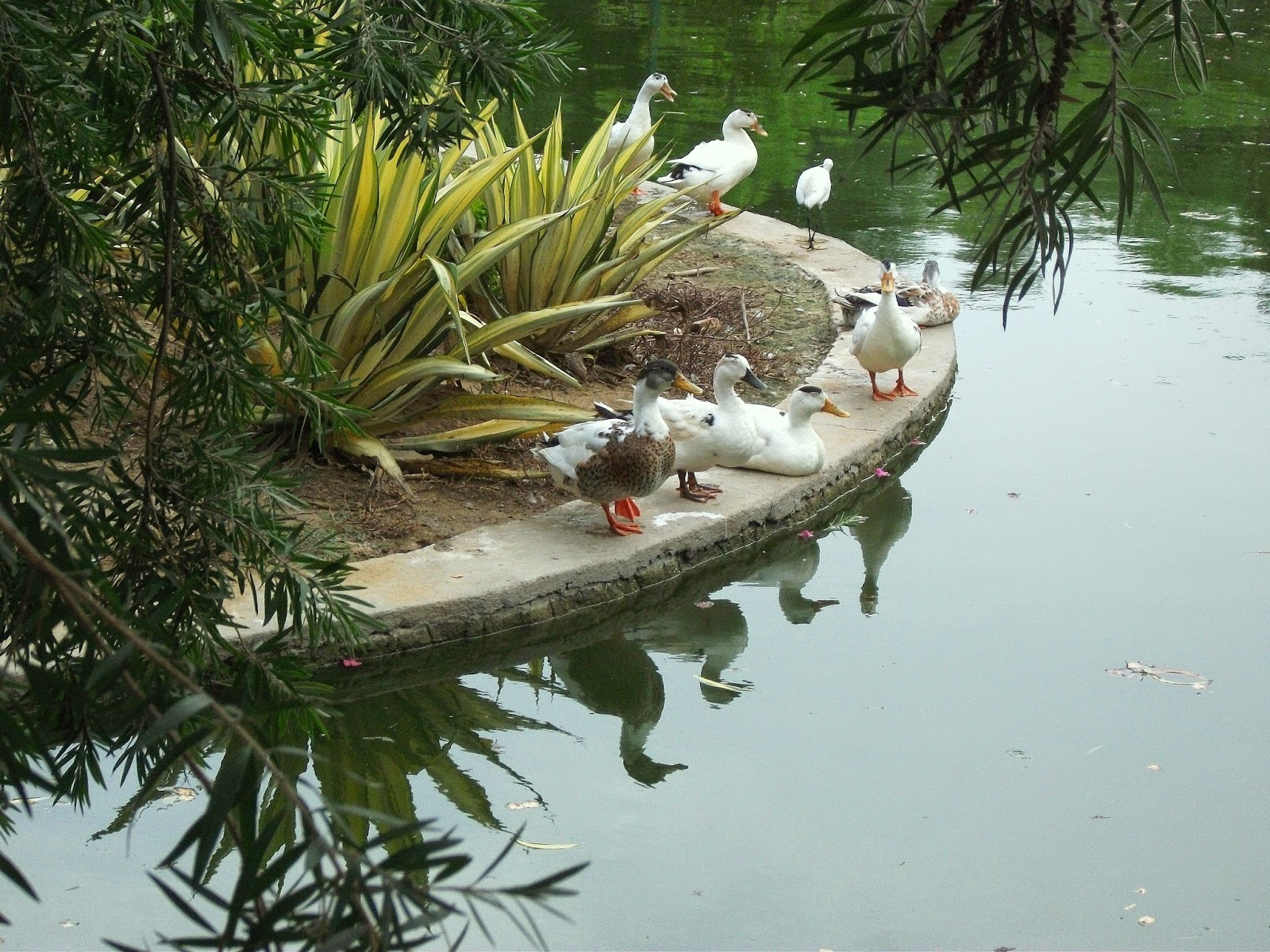
There is a water body on one side of the tomb of Sikandar Lodhi, and an arched bridge called the Athpulla. Centuries ago, the water body was connected to the river Yamuna. A few ducks are resident here, and I could also see one cormorant dunking into the water for tidbits

The Athpulla arched bridge
Went back to rest my tired limbs, lying down on the grass under a neem tree, thinking of the rains in Mumbai, wishing for the rains, wishing it would rain down, down on me ....

Monday, August 11, 2014

Full moon tonite


The Moonlight Sonata is one of my favorites, as it must be with millions of people worldwide. Countless millions, I am sure. For this is after all, one of the more popular compositions of Beethoven. Consisting of three movements of which the third movement is incredibly fast and ferocious, but it is the the first movement that has actually made this composition so popular.  Do the three movements tell a story? Some people think so ...


And yes, another August Moon up there tonite. Not the same as last year, though, for much water has flowed down the Volga and the Ganga. And who knows what it would be like, the next ..  

It is amazing that Beethoven was almost completely deaf in the last decade of his life but continued to compose pieces that have been characterized as masterpieces. Uncanny, and that's one of the reasons why he is regarded as a genius. I found a composition dedicated as an ode to Beethoven by Ernesto Cortazar, named as Beethoven's Silence, and this is truly haunting in its beauty, the kind of music that  keeps one awake deep into the moonlit night


In every full moon
as tonite

As in breathless spells,
Flow into my veins

Whisper into my soul
soft and light

In every
full
moon

Invite me
Ignite me
as tonite

Sunday, July 27, 2014

The fields of Panipat


The fields of Panipat are where three pivotal battles were fought. The first battle was in 1526, between Babur the first Moghul emperor of India and Sultan Ibrahim Lodhi. The second battle was fought in 1556 between the forces of Akbar, the greatest Mughal emperor led by Bairam Khan (Akbar was only 13) and Hemu Vikramaditya. The third battle was fought in 1761 between the forces of Ahmad Shah Abdali and the Marathas.

All of them were watersheds in Indian history and volumes could be written about the origin of these clashes, the course of the battles, the tactics and treacheries and the changes that they brought about. Especially the third battle, in which there were huge casualties. Now, a lovely patch of green among cultivated fields, with a small guesthouse which however remains under lock and key. For lack of visitors, presumably.


A small town, only a few hours from Delhi, I had an occasion to visit Panipat and nothing could make me miss the memorial at Panipat. Remembering my father, describing how Babur prepared his battle lines, with cannons dug into trenches in front, and cavalry hidden in mango groves in the flanks under the command of Humayun, his son. At the site where a black mango tree used to stand, there is a small memorial


Interesting, that checker board layout. I also came upon a strange looking bird, about the size of a peafowl but with a huge, curved beak foraging in the undergrowth by the road to the Panipat memorial


Never seen anything quite like it. Had a red patch at the back of its head, and my friend informs this to be the Indian Black Ibis. That certainly made my day!

Wednesday, July 23, 2014

Spring, Summer and the parched earth

Spring is fleeting in the hot and dusty plains of Northern India. Nevertheless, it makes its presence felt in the blooming of flowers, new green thrusting out of the trees. In front of my new residence, the teak trees sprung new leaves, the rose bushes all sprouted in full grandeur, especially the white one. The pinks, reds, blood reds, the orange and the miniature rose, apart from several others. Discovered the wee, small and frisky purple sun bird and another rather unusual bird with red and yellow coloring on its head  but the rest being the same brown as the trees. The coppersmith barbet, as my dear friend informs. And the brahminy mynah, the robins and sparrows. A whole family of parrots are resident in the huge neem trees outside. 

"Everything is blooming most recklessly; if it were voices instead of colors, there would be an unbelievable shrieking into the heart of the night."
~ Rainer Maria Rilke

The elusive coppersmith barbet, Faridabad
 
The purple sunbird, Faridabad


Baby parrot fell, couldn't fly. Mrs B carried it in. Grew a single tail feather. That one fell off. Grew new tail. Miss B has now become rather fond of it but we are determined to let it fly away once the rains come.

Baby falcon fell. Same story, until it was rather unceremoniously handed over to the keeper of the greens. 

And then, it was summer. Before one could realize, it was hot as the baking oven. Temperatures that crossed 45 degrees C. And no sign of the rains. Rains, as in Mumbai, sustained, overpowering, invasive rain that takes control! But these are the northern plains outside Delhi which the rain gods have decidedly overlooked this year.


The third movement from Summer, from the Four Seasons by Vivaldi, the strings faithfully mirroring the harsh and extreme weather. Or is it rather, the state of the mind, finding itself alone in a sea of conflicting emotions, trying to tear itself away from its moorings in search of the elusive unknown!

When there's no one outside in the afternoon, I have sometimes found an undescribable happiness in the searing heat of summer, when smoke appears to be rising from the deserted roads and not the slightest movement in the trees, not a soul stirring but my unquenchable thirst in a world that appeared to have come to a dead stop in all finality.

Slowly, imperceptibly, the heat washed away as night fell.